



Reduced Rutting with Carbon Reinforcement
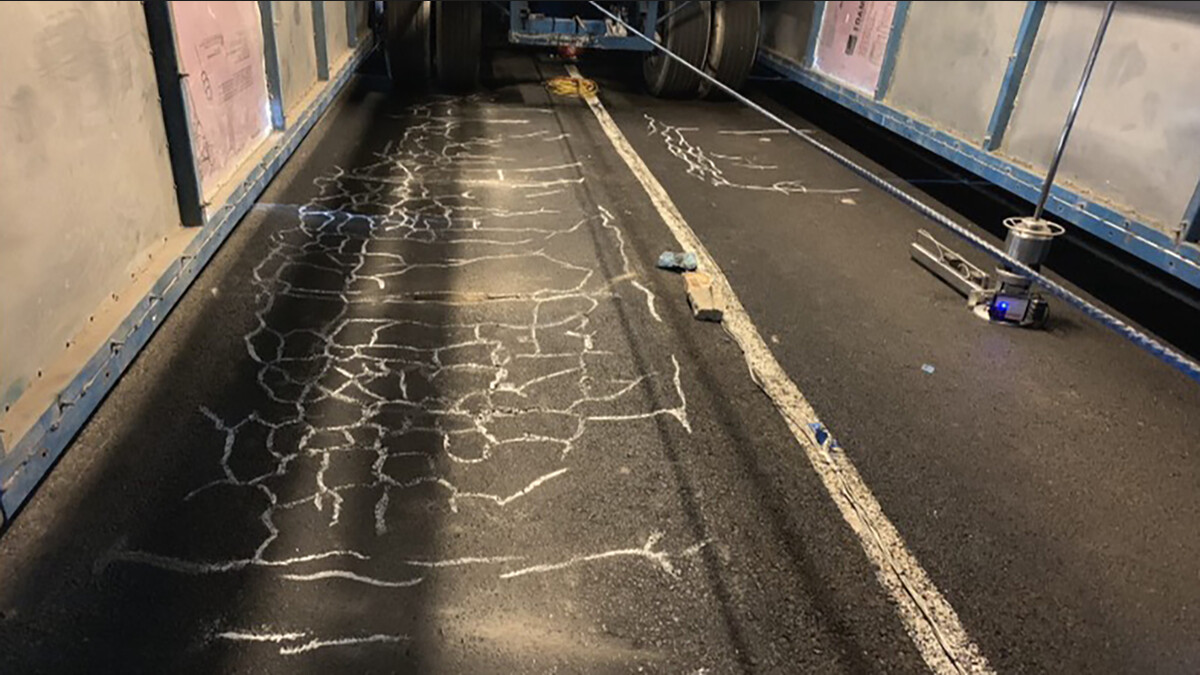
Accelerated pavement testing in the United States confirms the effectiveness of S&P Carbophalt® G 200/200 asphalt reinforcement. The reinforced test section exhibited significantly less rutting and cracking than a comparable pavement structure without reinforcement.
As traffic loads increase, asphalt pavements are prone to rutting and cracking, leading to higher maintenance requirements and a shorter service life. Modern carbon fibre reinforcement systems can counteract this process and significantly improve the durability of asphalt pavements.
Research findings from the United States further confirm the effectiveness of such reinforcement. At the International Conference on Transportation and Development (ICTD), researchers from the University of Texas at Arlington presented studies in which S&P Carbophalt® G 200/200 asphalt reinforcement was tested under realistic conditions.
57% Less Rutting
As part of a full-scale trial, the researchers compared two identical asphalt pavement structures. One test section was reinforced with S&P Carbophalt® G 200/200, while the reference section was constructed without reinforcement. Both sections were then artificially aged and subjected to heavy wheel loads over an extended period.
Key Parameters of the APT Loading Tests
Target Temperatures
- Sections used to investigate fatigue cracking and reflective cracking: 20°C
Loading Conditions
- Bidirectional trafficking of the test sections
- Single axle load: 81.6 kN
- Tyre inflation pressure: 690 kPa
- Lateral wander: maximum lateral position ±38 cm, standard deviation 25 cm
Termination Criteria
Accelerated pavement testing continued until one of the following criteria was reached:
- 16.5 mm of permanent deformation at the pavement surface
- Cracking present in 25% of a wheel path area (equivalent to 50% of the actual trafficked area)
Cracking Significantly Delayed
The results were clear: at the end of the test programme, the reinforced pavement exhibited 57% less rutting than the unreinforced reference section. Maximum deformation reached just 7 mm, compared with 16 mm on the unreinforced section.
In addition to improved resistance to deformation, the carbon fibre reinforcement also had a positive effect on cracking performance. The reinforced test section developed 61% less cracking area than the unreinforced reference section. Furthermore, the first crack appeared significantly later in the reinforced pavement.
Scientific Validation for Practical Applications
The researchers concluded that asphalt pavements reinforced with carbon fibre reinforcement can achieve at least twice the service life in terms of rutting and cracking resistance compared with similar structures without reinforcement. The study therefore confirms the benefits of carbon fibre reinforcement for the sustainable preservation and rehabilitation of transport infrastructure.
Conclusion
The accelerated pavement tests conducted in the United States provide independent scientific validation of the effectiveness of S&P Carbophalt® G 200/200. Reduced rutting, lower crack development, and longer maintenance intervals all contribute to extending the service life of asphalt pavements while reducing maintenance costs.